
Spanish Citizenship 2026: Complete Guide to All Routes
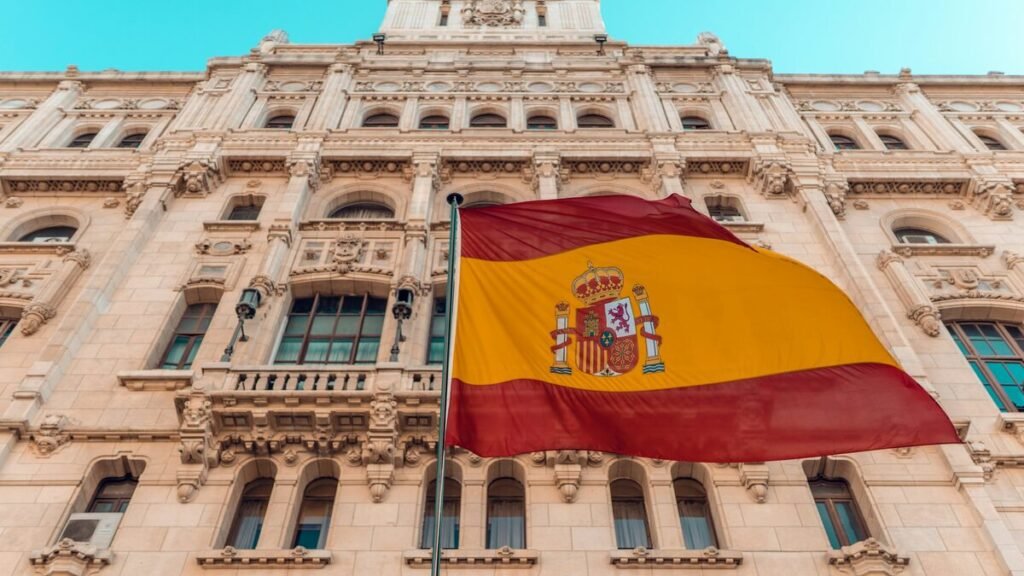
Spanish citizenship grants Spanish nationality and the rights of an EU citizen, including the right to live and work in other EU member states subject to the applicable rules. Eligibility depends on the legal route and your circumstances; marriage or Spanish ancestry alone does not automatically establish eligibility. Below, Elena Mochales (ICAM C69993), a Madrid-registered immigration lawyer with over 20 years of experience, explains the main routes in clear, practical terms.
Main Routes and Special Cases for Spanish Citizenship
| Route | Residence Required | Key Requirement | Timing |
|---|---|---|---|
| Citizenship by Residence | 10 years generally; 5, 2 or 1 year in specified cases | Legal, continuous residence immediately before applying; good civic conduct and sufficient integration | Meet the residence requirement before applying; processing is a separate stage |
| Democratic Memory Law | No residence period under this special option route | Eligibility under Additional Provision 8 of Law 20/2022 and compliance with the applicable deadline | Time-limited route; do not assume new applications are available in 2026 |
| Residence Route for a Spanish Citizen’s Spouse | 1 year, subject to the statutory conditions | At least one year married when applying, without legal or de facto separation | Marriage does not automatically confer nationality |
| Citizenship by Option | No general residence period | A qualifying connection under Article 20 of the Civil Code | Age limits and deadlines depend on the specific case |
Citizenship by Residence: The Most Common Path
Citizenship by residence requires legal, continuous residence in Spain immediately before the application, good civic conduct and sufficient integration. The process is administered by the Dirección General de Seguridad Jurídica y Fe Pública (DGSJFP), under Spain’s Ministerio de Justicia. The Ministry of Justice’s nationality-by-residence guidance explains these core requirements.
For the detailed residence procedure, read our Spanish citizenship by residence requirements guide.
Residence Requirements by Nationality and Circumstances
- General rule: 10 years.
- 5 years: People who have obtained refugee status.
- 2 years: Nationals by origin of Ibero-American countries, Andorra, the Philippines, Equatorial Guinea or Portugal, and Sephardic applicants.
- 1 year: The specific cases in Article 22.2, including birth in Spain; failure to exercise an option right in time; qualifying guardianship, full-representation curatorship, care or foster care by a Spanish citizen or institution for two consecutive years; a qualifying marriage to a Spanish citizen; qualifying widowhood; or birth abroad to a parent or grandparent who was originally Spanish.
- Nationality by origin and option: These must be assessed separately from residence-based acquisition; see Citizenship by Option.
Article 22 of the Civil Code sets these periods and their conditions. Residence must be legal, continuous and immediately before applying; this guide does not prescribe a universal number of permitted days abroad. The residence application procedure and integration tests are regulated by Real Decreto 1004/2015. Exam exemptions and dispensations must be checked for the individual applicant.
Democratic Memory Law (Ley de Memoria Democrática)
Additional Provision 8 of Law 20/2022 established a time-limited nationality option route for specified family circumstances. It set a two-year period from the law’s entry into force and allowed the Council of Ministers to extend that period by one year. Do not assume a new application can be made in 2026; check the applicable deadline and any transitional rules with the competent consulate. Previously lodged applications may still be processed.
The statutory categories include:
- People born abroad to a parent or grandparent who was originally Spanish and lost or renounced Spanish nationality as a consequence of exile for the reasons specified in the law.
- Children born abroad to Spanish women who lost their nationality by marrying foreigners before the 1978 Constitution came into force.
- Adult children of people whose Spanish nationality of origin was recognised through the option provisions of this law or Additional Provision 7 of Law 52/2007.
- Eligibility depends on the applicable implementing instructions and family evidence; a Spanish great-grandparent alone is not a general entitlement under this provision.
Read our complete citizenship by descent guide and our detailed Democratic Memory Law guide for background. For availability and transitional arrangements, use the current instructions of the competent consulate rather than assuming a route remains open.
Citizenship by Marriage
Marriage to a Spanish citizen does not automatically confer nationality. Under Article 22.2.d, an applicant may qualify for the residence route after one year of legal, continuous residence immediately before applying if, at the application date, they have been married to a Spanish citizen for at least one year and are not separated legally or in fact. The marriage and the relevant circumstances must be documented. Article 22.3 contains a specific residence rule for a spouse living with a Spanish diplomatic or consular official accredited abroad; it is not a general exception for couples living overseas.
Read our Mixed Marriage Spain guide for requirements and the step-by-step process.
For the nationality requirements, read our guide to citizenship by marriage in Spain.
Citizenship by Option
Option is distinct from nationality by origin. A child born to a Spanish father or mother is generally Spanish by origin under Article 17.1.a; this should not be described as an ordinary option application. Article 20 of the Civil Code provides option rights in defined circumstances, without a general residence requirement:
- People who are or have been subject to the parental authority (patria potestad) of a Spanish citizen. This is not the same as every form of guardianship; the usual option deadline and any applicable extension must be checked.
- People whose father or mother was originally Spanish and born in Spain. Article 20.3 sets no age limit for this particular option.
- Cases covered by Articles 17.2 and 19.2: parentage or birth in Spain established after age 18, or adoption by a Spanish citizen at age 18 or above. These option rights have a two-year period from the relevant determination or adoption.
CCSE and DELE Exams
For nationality by residence, the standard integration tests administered by the Instituto Cervantes are CCSE and DELE A2 or higher. They are not mandatory for every applicant: exemptions, dispensations and adapted assessments depend on the person’s circumstances.
- CCSE (Constitutional and Sociocultural Knowledge of Spain): 25 questions, with at least 15 correct answers needed to pass. Its certificate is valid for four years from approval of the assessment record.
- DELE A2 or higher (Diploma de Español como Lengua Extranjera): Evidence of Spanish language proficiency. DELE diplomas have indefinite validity; an existing qualifying diploma does not expire after four years.
Article 6 of Real Decreto 1004/2015 lists nationalities exempt from DELE and addresses alternative evidence for minors and specified supported applicants. Disability does not automatically mean exemption: reasonable adjustments may apply. A Spanish ESO qualification or literacy difficulties may be relevant to a dispensation or adapted test under the applicable procedure. Check the official Cervantes examination guidance and the Ministry’s dispensation procedure before booking or omitting an exam.
For residence applications, use our Spanish citizenship document checklist to review the documents for your circumstances.
Frequently Asked Questions
How long does Spanish citizenship take to process?
For nationality by residence, Article 11.3 of Real Decreto 1004/2015 sets a maximum of one year to decide and notify, counted from receipt by the competent Directorate-General. If no express decision is issued within that period, the application is deemed rejected by administrative silence. This is not a guaranteed approval or completion date; procedural suspensions and the individual file can affect the calculation. Advice on the available challenge should be based on the actual file, not an assumed Madrid processing average.
Can I keep my original nationality when I become Spanish?
Article 23.b of the Civil Code generally requires a declaration renouncing the previous nationality for acquisition by option, naturalisation by royal decree or residence, subject to its statutory exceptions. Those exceptions cover the countries referred to in Article 24.1 and Sephardic people originating from Spain; they are not proof that Spain has a dual-nationality treaty with every such country. Applicable treaties, including the nationality convention with France, must also be considered. Whether another nationality is retained or lost also depends on that country’s law; a declaration before Spanish authorities must not be assumed to have the same effect abroad.
Do I lose Spanish citizenship if I live abroad?
Living abroad alone does not automatically cause loss of Spanish nationality. Article 24 of the Civil Code sets specific loss rules, including some affecting Spaniards by origin, with conditions, exceptions and conservation declarations for the cases it identifies. Article 25 separately addresses loss for Spaniards who are not Spanish by origin, including three years of exclusive use of the nationality they declared they were renouncing; do not assume an Article 24 conservation declaration resolves an Article 25 case. The constitutional protection against depriving Spaniards by origin of nationality is not a guarantee that nationality can never be lost. Article 26 regulates recovery, subject to its requirements.
What documents do I need for a citizenship application?
The checklist depends on the route, age and circumstances. A residence application can require identity and residence documents, a birth certificate, criminal-record evidence where applicable, evidence of integration or the relevant exemption or dispensation, and documents proving any reduced residence period. Foreign documents may need legalisation or an apostille and an official translation, depending on the document and applicable rules. Some Spanish records and exam results can be checked by the administration where the relevant authorisation is given. Use the Ministry of Justice’s current checklist rather than treating a single document list as universal.
Get Expert Help with Your Citizenship Application
Elena Mochales, Registered Lawyer (ICAM C69993), Madrid. I provide transparent legal guidance in English and Spanish for all citizenship routes. Book your free consultation here — available in Madrid, Barcelona, or via video call worldwide.
Disclaimer: This article is for informational purposes only and does not constitute legal advice. Immigration laws change. Consult with a qualified immigration lawyer for personalised guidance.
Once you have nationality: here is how to get your Spanish passport (process, documents & fees).

This content is for informational purposes only and does not constitute legal advice. Each case is unique. Consult with a qualified immigration lawyer for advice tailored to your situation.