Spanish Citizenship by Descent: Complete Guide 2026
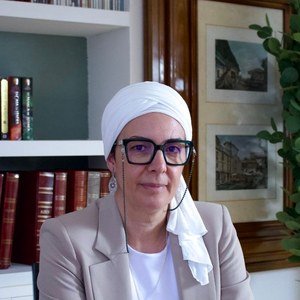
Spanish citizenship by descent is the fastest path to a Spanish passport for millions of people worldwide with Spanish ancestry. Under the Democratic Memory Law (Ley 20/2022) and Article 17 of the Código Civil, descendants of Spanish nationals — including children, grandchildren, and in certain cases great-grandchildren — may acquire Spanish nationality without ever needing to reside in Spain. Elena Mochales (ICAM C69993) provides this complete guide based on over 25 years of immigration practice.
Who Qualifies for Spanish Citizenship by Descent?
Route 1: Children of Spanish Nationals (Código Civil, Art. 17)
If your father or mother was Spanish at the time of your birth, you are a Spanish national by origin (español de origen), regardless of where you were born. This is the simplest and most definitive route — it is a right, not an application subject to approval.
Route 2: Democratic Memory Law — Grandchildren of Spaniards
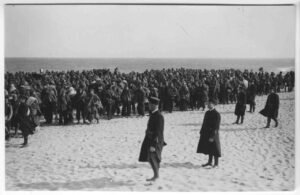
The Ley 20/2022 (Ley de Memoria Democrática), initially enacted in October 2022 and extended through October 2025, created a time-limited pathway for grandchildren of Spaniards who lost or had to renounce their Spanish nationality due to political exile or economic emigration.
You may qualify if:
- Your grandparent was originally Spanish and left Spain between 1936 and 1955 for political, ideological, or economic reasons
- Your Spanish grandparent lost or renounced their nationality upon acquiring another nationality
- Your parent (the child of the Spanish grandparent) has already obtained nationality via this law
Route 3: Children of Spanish Women Who Lost Nationality
Before the 1978 Constitution, Spanish women who married foreign nationals automatically lost their Spanish nationality. The Democratic Memory Law corrects this historical inequality. Descendants of Spanish women who lost nationality upon marriage may now apply for Spanish citizenship by descent.
Required Documents
- Birth certificate of the applicant — apostilled and translated into Spanish by a sworn translator (traductor jurado)
- Birth certificate of the Spanish parent or grandparent — issued by the Spanish Civil Registry
- Marriage certificate of parents (if applicable) — apostilled and translated
- Proof of exile or emigration (for LMD applications) — documents from the Spanish consulate, UNHCR records, or historical archives
- Valid passport of the applicant
- Completed application form (Anexo I for LMD applications)
Application Process Step by Step
- Gather Spanish ancestor documentation. Request birth certificates from the Civil Registry in Spain (Registro Civil Central or the local registro where the ancestor was registered). This can be done online via the Ministerio de Justicia website.
- Translate and apostille all foreign documents. Birth certificates, marriage certificates, and criminal records from your country of residence must bear the Hague Apostille and be translated by a sworn Spanish translator.
- Submit the application. LMD applications can be filed at the Spanish consulate in your country of residence or directly at the Civil Registry in Spain. Standard descent applications (Código Civil Art. 17) are filed at the Civil Registry.
- Await resolution. Processing times vary between 6 months and 2 years depending on the consulate and case complexity.
- Complete the jura. Once approved, you must take the oath of nationality (jura de nacionalidad) before the Civil Registry or a Spanish Notary Public.
Practical Example: Carlos from Argentina
Carlos, a 35-year-old Argentine citizen living in Buenos Aires, discovered his grandfather emigrated from Galicia to Argentina in 1950. His grandfather had lost Spanish nationality upon naturalizing as Argentine. Under the Democratic Memory Law, Carlos was able to apply through the Spanish Consulate in Buenos Aires. He submitted his grandfather’s Spanish birth certificate, his own birth certificate with apostille and translation, and form Anexo I. His application was approved in 14 months. Carlos is now a dual Spanish-Argentine citizen.
Frequently Asked Questions
Do I need to live in Spain to apply for citizenship by descent?
No. Citizenship by descent is processed entirely from abroad through the Spanish consulate in your country of residence. No residence in Spain is required.
Is the Democratic Memory Law still available in 2026?
The initial deadline of October 2024 was extended to October 2025. While the formal application window closed, applications submitted before the deadline continue to be processed. Consult a Spanish immigration lawyer for your specific situation as there are ongoing legislative discussions about further extensions.
Can great-grandchildren apply under the Democratic Memory Law?
Generally, no. The LMD extends to grandchildren. However, if your parent (the grandchild) obtained nationality under the law, you may then apply as the child of a Spanish citizen under Código Civil Art. 17. This creates a two-step chain: grandparent → grandchild → great-grandchild.
Do I need to speak Spanish to apply by descent?
No Spanish language requirement applies for citizenship by descent (Código Civil Art. 17) or Democratic Memory Law applications. The CCSE and DELE exams are required only for citizenship by residence.
Book a free consultation with Elena Mochales (ICAM C69993) to evaluate your eligibility for Spanish citizenship by descent. Bilingual guidance in English and Spanish. Video call consultations worldwide.
← Back to: Spanish Citizenship 2026: Complete Guide to All Routes
This content is for informational purposes only and does not constitute legal advice. Each case is unique. Consult with a qualified immigration lawyer for advice tailored to your situation.