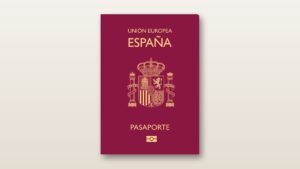
Spanish Passport vs Residency 2026: What Really Changes After Citizenship
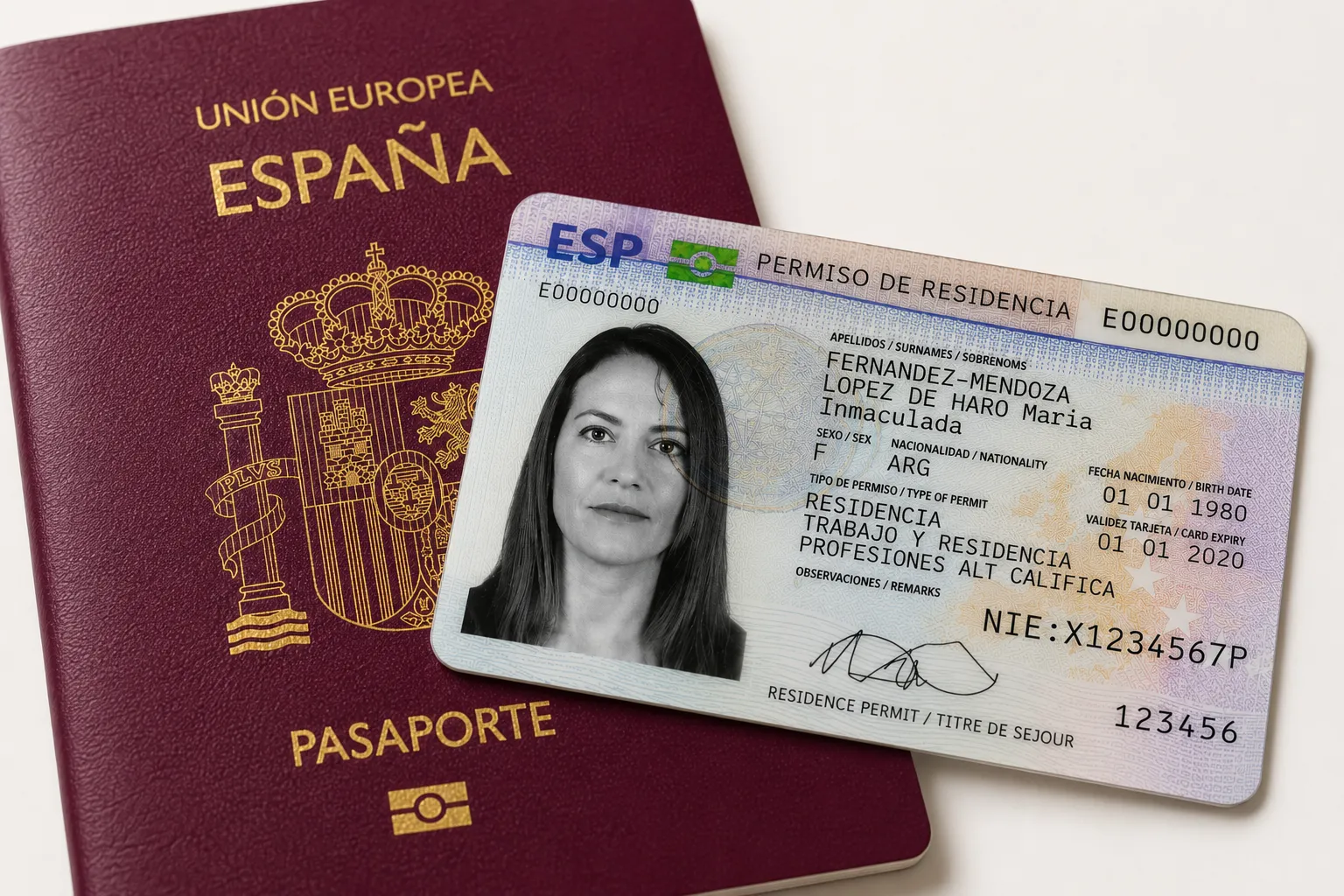
Spanish citizenship grants an EU passport, permanent residency rights, voting power, and protection from deportation — all of which a residence permit, even EU Long-Term, cannot offer. Permanent residence can be revoked if you leave Spain for too long; citizenship is irreversible. Below, Elena Mochales (ICAM C69993, Madrid) explains every practical difference between permanent residence and Spanish nationality.
What Changes: Residence vs Citizenship Comparison Table
| Right | EU Long-Term Residence | Spanish Citizenship |
|---|---|---|
| Permanence | Revocable if absent from Spain 12 consecutive months or 30 months in 5 years | Irrevocable except in extreme fraud cases |
| Passport | Must use home country passport | Spanish passport — visa-free to 194 countries |
| Work in the EU | Requires additional permits in destination country | Unrestricted EU labour market access |
| Voting | No national or European voting rights | Full voting rights in general, regional, and European elections |
| Deportation protection | Can be expelled for serious crimes | Cannot be expelled from Spanish territory |
| Consular protection | Only from country of nationality | Spanish embassies + any EU embassy where Spain has no representation |
| Dual nationality | Not applicable | Formally requires renunciation except for Ibero-American and select countries |
Introduction
You have lived in Spain for years. Your TIE card is current, your empadronamiento is up to date at the Madrid Ayuntamiento, and you speak Spanish with your neighbours. So what actually changes when you swap your NIE-based residence card for a Spanish DNI and passport?
The answer is more nuanced than most people realise. As a Madrid-based immigration lawyer with over 20 years of experience, I have guided hundreds of clients through this exact decision. You may hold an EU Long-Term Residence permit (Larga Duración) under Real Decreto 557/2011. Or perhaps a Non-Lucrative Visa or Digital Nomad Visa. In all cases, the step from permanent residence to Spanish nationality carries profound legal consequences — and not all of them are immediately obvious.
This article covers every difference that matters: passports, voting, deportation, taxes, inheritance, EU mobility, and the family reunification process. By the end, you will know exactly what Spanish citizenship gives you that residence cannot — and whether making the switch is right for your situation.
The Spanish Passport: A Top-3 Global Document
According to the Henley Passport Index 2026, the Spanish passport ranks #2 globally, granting visa-free or visa-on-arrival access to 194 destinations. For comparison: a UK passport covers approximately 190 destinations post-Brexit; a US passport covers 186; a Moroccan passport covers 68. For citizens of countries with restricted mobility, acquiring Spanish nationality transforms their freedom of movement overnight.
The passport is issued by the Cuerpo Nacional de Policía (Dirección General de la Policía). You must first complete the oath of nationality — the jura de nacionalidad — at the Civil Registry or before a Notary Public. This process is governed by Ley 39/2015 and the Código Civil, Articles 17–26.
Residence vs Citizenship: The Legal Basis
Under Spanish law, residence — whether temporary or EU Long-Term — is an administrative authorisation. It is governed primarily by Ley Orgánica 4/2000 (Ley de Extranjería) and its implementing regulation, Real Decreto 557/2011. The Oficina de Extranjería, under the Ministerio de Inclusión, Seguridad Social y Migraciones, grants, renews, and revokes residence permits.
Spanish nationality, by contrast, is governed by the Código Civil (Articles 17–26) and the Ley 19/2015 and Ley 20/2022 (Ley de Memoria Democrática). The Dirección General de Seguridad Jurídica y Fe Pública (DGSJFP), under the Ministerio de Justicia, processes nationality applications.
This legal distinction is crucial. A residence permit is an authorisation that can be revoked; nationality is a right that can only be lost in the most extreme circumstances. To acquire nationality by residence, you must pass two exams. The CCSE (Conocimientos Constitucionales y Socioculturales de España) tests your knowledge of Spain. The DELE A2 exam certifies your Spanish language level. Both are administered by the Instituto Cervantes under Real Decreto 1004/2015.
Practical Example: Maria, 10 Years in Madrid
Maria arrived from Argentina in 2016 on a student visa. After completing her Master’s degree, she transitioned to a work permit (Cuenta Ajena), renewed twice, and in 2023 obtained EU Long-Term Residence. She now holds a valid TIE card, is registered at Madrid’s Oficina de Extranjería, and her empadronamiento at the Ayuntamiento de Madrid is uninterrupted.
Maria has two options: maintain her Larga Duración status permanently, or apply for Spanish nationality. As an Argentine national, she benefits from the two-year residence requirement and the dual nationality convention between Spain and Argentina. Her decision comes down to two factors. First, she wants a Spanish passport to travel visa-free to the United States (Argentina requires a B2 visa). Second, she wants to vote in Spanish national elections. After consultation with our office, she chose to apply for nationality.
Maria is now in month 14 of her application, which is pending at the DGSJFP. She continues to live and work normally in Madrid while awaiting the resolution. Once approved, she will complete the jura, obtain her DNI and Spanish passport at the Policía Nacional, and become a dual Spanish-Argentine citizen.
What Does NOT Change After Citizenship
Some aspects of daily life remain the same whether you hold a TIE or a DNI.
- Tax obligations: Both residents and citizens are taxed on worldwide income under Ley 35/2006 (Ley del IRPF) if they spend 183+ days per year in Spain. Citizenship creates no new tax liabilities.
- Healthcare access: Both long-term residents and citizens access the Sistema Nacional de Salud (SNS) under identical conditions. The tarjeta sanitaria functions identically.
- Social Security contributions: Both residents and citizens contribute to and benefit from the Seguridad Social under the same rules. Years of legal residence count toward the pension regardless of nationality.
- Property ownership: Citizens and residents face identical rules when buying, selling, or inheriting Spanish real estate.
Common Mistakes When Applying for Citizenship
- Letting the empadronamiento lapse: Gaps in your padrón history at the Madrid Ayuntamiento are one of the most common causes of nationality denial. Request your Certificado Histórico Colectivo de Empadronamiento before applying.
- Delaying the CCSE and DELE exams: Exam dates fill quickly in Madrid (Instituto Cervantes, Calle Alcalá 49). Book at least 3 months in advance. Both certificates are valid for 4 years.
- Submitting foreign documents without apostille: Birth certificates and criminal records from your country of origin must bear the Hague Apostille and be translated by a Spanish sworn translator (traductor jurado).
- Not monitoring your application: The DGSJFP has up to one year to resolve. If no response, the application is considered denied by silencio administrativo negativo. File an appeal immediately.
- Travelling abroad during the application: Extended absences can complicate your continuous residence requirement. Keep travel under 90 days per trip.
Frequently Asked Questions
What is the difference between Spanish residence and citizenship?
Residence is an administrative permit that can be revoked; citizenship is a permanent right. Residence grants the right to live and work in Spain. Citizenship adds an EU passport, voting rights, consular protection, and absolute protection from deportation. Residence is governed by the Ley de Extranjería (LO 4/2000); nationality by the Código Civil and regulations from the Ministerio de Justicia.
Do I lose my original nationality when I become Spanish?
Spain generally requires renunciation of your previous nationality at the jura ceremony. However, dual nationality conventions exist with all Ibero-American countries, Andorra, the Philippines, Equatorial Guinea, Portugal, and for Sephardic Jews. Nationals of other countries must formally renounce — though some states do not recognise this renunciation, creating de facto dual citizenship.
How long does the citizenship process take in Madrid in 2026?
The DGSJFP has up to one year to resolve. In practice, Madrid cases take 18–36 months depending on caseload. If no resolution within one year, the application is denied by administrative silence. You may then file a recurso de reposición or a recurso contencioso-administrativo before the Audiencia Nacional.
Can I vote in Spanish elections with permanent residence?
No. Voting in national, regional, and European Parliament elections is reserved exclusively for Spanish citizens. EU citizens may vote in municipal and European elections. Non-EU residents have no voting rights at any level. Spanish citizenship grants full electoral rights at all levels.
Is Spanish citizenship worth it if I already have a strong passport?
The value depends on your personal circumstances. Citizens of Ibero-American countries benefit from the two-year residence requirement and dual nationality, making citizenship a low-cost upgrade. For others, the 10-year residence requirement plus the renunciation requirement may outweigh the passport benefits. An individual consultation with an immigration lawyer is recommended to evaluate your specific situation.
Do my children become Spanish citizens automatically?
Children born after you acquire Spanish citizenship automatically become Spanish nationals by origin (españoles de origen). Children born before your naturalisation may apply for nationality by option within two years of your acquisition. Children born in Spain to foreign parents may acquire citizenship after one year of legal residence under Article 22 of the Código Civil.
Summary
Spanish citizenship is an irreversible upgrade from any residence permit. It grants an EU passport, full voting rights, absolute protection from deportation, and access to EU-wide labour markets without additional paperwork. Permanent residence remains a stable and valuable status in its own right, particularly for those who cannot or prefer not to renounce their original nationality. The decision rests on three factors: your country of origin, your professional and family plans, and your long-term commitment to Spain. Speak with a qualified immigration lawyer to evaluate your options before filing any application.
Call to Action
Elena Mochales, Registered Lawyer (ICAM C69993), Madrid. Whether you need permanent residence, Spanish nationality, or simply want to understand your options, I provide transparent legal guidance in English and Spanish. Book your free consultation here — available in Madrid or via video call worldwide.
Disclaimer: This article is for informational purposes only and does not constitute legal advice. Immigration laws and regulations change. Consult with a qualified immigration lawyer for personalised guidance. Last reviewed: July 2026.
Getting started? Read our step-by-step guide to getting a Spanish passport in 2026.

This content is for informational purposes only and does not constitute legal advice. Each case is unique. Consult with a qualified immigration lawyer for advice tailored to your situation.